
Why We Chose Recognizable Over Realistic
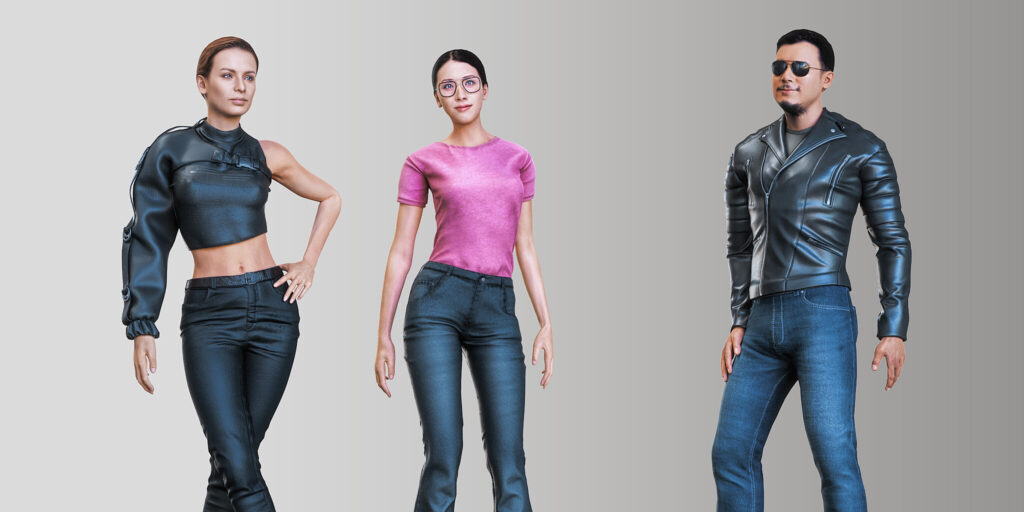
This summer, BBC viewers following the FIFA World Cup in a 3D experience built by Immersiv saw themselves in the stands. Not a generic supporter model. Their own avatar, generated from a photo.
None of those avatars are photorealistic, and that is the point.
The bet
Building a 3D human the film-industry way means a rig of roughly a hundred synchronized cameras, calibrated against each other so the geometry can be reconstructed. It is accurate, expensive, and impossible to run every fan through.
We started in 2017 from the other end: how much of a person survives a single selfie? Not how photorealistic can we get. How recognizable. Under the hood it is less exotic than people assume — a parametric 3D face model fitted to the input image, with a dial between likeness and stylization. You can see the result for yourself in MetaPerson Creator.
At the time that looked like settling for less. It turned out to be the whole product.
What the uncanny valley actually reacts to
The instinct is that discomfort comes from not being real enough, so you push toward realism. On OpenCV Live, Victor Erukhimov made the case that the trigger is mismatch rather than fidelity. A face reconstructed slightly soft, given sharp CG eyes, feels wrong precisely because the two halves disagree. Everything has to sit at one level of detail.
Which leaves a door open. An avatar that is clearly not a photograph never enters the valley, because it never claims to be a person. Research he cited finds the effect weaker for gamers, who look at 3D models all day, and weaker again when the avatar mirrors your own movement — at that point you read it as something you are driving.
We tested the part that actually matters commercially: can people tell who it is? In focus groups across several countries, recognition from an avatar came out close to recognition from a photograph of the same person.
The bodies our customers asked us to make worse
We once shipped honest full-body reconstruction from a photo. Real proportions. Customers came back with one note: their users do not want realistic bodies, they want good-looking ones. Every avatar has had a good-looking body since.
Accuracy is not always the product. Sometimes it is the thing standing in its way.
Watch the full episode
Victor also covers how we generate consistent long-form human video, and the time our avatars turned up somewhere we did not expect.